Author: Hotcoin Research
introduction
2025 was a dramatic year for the crypto market: at the beginning of the year, driven by a macroeconomic recovery and favorable policies, the prices of Bitcoin and Ethereum soared to new all-time highs, institutional funds rushed in, and a wave of digital asset treasury (DAT) companies swept through the capital markets. However, after the summer, market sentiment took a sharp turn for the worse. In mid-October, a "10/11 panic" triggered a deleveraging frenzy, causing Bitcoin prices to plummet, and Altcoin suffered a "Waterloo"-like crash, resulting in a rollercoaster ride throughout the year with a "rise followed by a fall" pattern.
This article will provide an in-depth review of the 2025 crypto market from multiple perspectives, including the macro environment, policy regulation, institutional participation, market trends, hot sectors, and on-chain data. Based on this review, it will also look ahead to development trends and investment opportunities in 2026. The article aims to summarize key events and data from 2025, extract the underlying logic of market evolution, and provide investors with forward-looking insights for the coming year.
I. Macroeconomic Shift and Favorable Policies: A "tailwind" for the Crypto Market
1. The global macroeconomic environment is improving.
The global economic environment is expected to improve relatively in 2025, with easing inflationary pressures prompting major central banks to shift their monetary policy stance towards easing. The Federal Reserve ended its two-year rate hike cycle in the first half of the year and began a rate-cutting cycle before the end of the year. Its quantitative easing (QT) program, which began in 2022, will officially end on December 1, 2025.
Expectations of lower borrowing costs boosted market appetite for risk assets, leading to a bull market in US stocks in 2025 driven by the artificial intelligence boom, with tech stocks leading the gains and the S&P 500 hitting new highs. However, the strength of US stocks also diverted some attention and funds from crypto assets, causing the overall performance of the crypto market to lag behind that of US stocks in 2025.
In terms of commodities, gold prices have steadily climbed, constantly hitting new historical highs due to the weakening dollar and rising geopolitical risks; while the prices of other commodities such as crude oil have risen moderately due to the recovery in global demand.
Overall, the macroeconomic environment was relatively favorable for the crypto market in the first three quarters of 2025, with a weakening dollar and peaking interest rates providing support, and ample liquidity in risk assets. However, increased volatility in global markets in the fourth quarter, coupled with a surge in US Treasury yields triggering a return of risk aversion, impacted high-beta crypto assets at one point.
2. US regulatory easing
With the 2024 US presidential election concluded and the pro-crypto Trump returning to the White House, he quickly delivered on his campaign promises after taking office in January 2025, sending unprecedentedly favorable policy signals to the crypto industry and accelerating a "regulatory reversal": the passage of the GENIUS Act, a stablecoin bill, provided a clear framework for the reserve regulation and compliant operation of dollar-denominated stablecoins; simultaneously, bipartisan lawmakers cooperated to advance a new digital asset market structure bill, clearly defining the regulatory boundaries between security tokens and commodity tokens, and legitimizing the legal status of mainstream crypto assets such as Bitcoin and Ethereum. These measures signify a shift in US regulatory attitude from previous high-pressure crackdowns to rational inclusiveness, injecting a strong boost into the crypto market.
At the enforcement level, the SEC and CFTC have also adjusted their strategies, placing greater emphasis on collaboration with the industry and providing clear guidance to support innovation while protecting consumers and financial stability. For example, the CFTC has adopted an open attitude towards prediction markets, viewing them as derivative contracts based on real events and allowing compliant platforms to offer such trading.
The significant improvement in the US regulatory environment has not only boosted confidence in the domestic market but also had a demonstrative effect on other jurisdictions globally. Europe officially implemented the MiCA framework in 2025, covering unified regulatory standards for issuance, trading, and custody; Hong Kong launched a comprehensive virtual asset exchange licensing system and drafted stablecoin regulations, striving to become the Asia-Pacific crypto financial center; the Middle East, Singapore, and other regions further optimized their tax and compliance policies to attract crypto startups and capital. In contrast, mainland China maintains a strict regulatory stance on crypto trading, and even reiterated its crackdown on crypto speculation by the end of 2025, highlighting the policy divergence among countries.
Overall, the global cryptocurrency regulatory environment improved significantly in 2025 compared to previous years. The easing of policies in the United States allowed compliant funds to enter the market on a large scale, prompting other countries to explore regulatory frameworks adapted to the new asset class, creating a competitive and cooperative environment. This series of favorable policies laid the foundation for the prosperity of the cryptocurrency market in the first half of 2025.
3. Traditional finance embraces crypto.
While policies were thawing, traditional financial institutions embraced crypto assets aggressively in 2025, pushing the industry further towards mainstream adoption. First, large-scale Bitcoin ETFs were launched. Following the approval of the first Bitcoin spot ETF in the US at the end of 2024, 2025 saw a massive influx of funds. As of December 25, 2025, the total assets under management (AUM) of US Bitcoin spot ETFs reached approximately $117.3 billion, holding over 1.21 million Bitcoins, representing about 6.13% of the total Bitcoin supply. Ethereum ETFs had AUM of approximately $17.1 billion, about one-tenth of Bitcoin ETFs. The second half of 2025 saw an "Altcoin ETF boom," with several mainstream Altcoin ETFs being approved and listed for trading, including Ripple (XRP) , Solana (SOL) , Litecoin (LTC) , Dogecoin (DOGE) , Hedera (HBAR) , and Chainlink (LINK) .
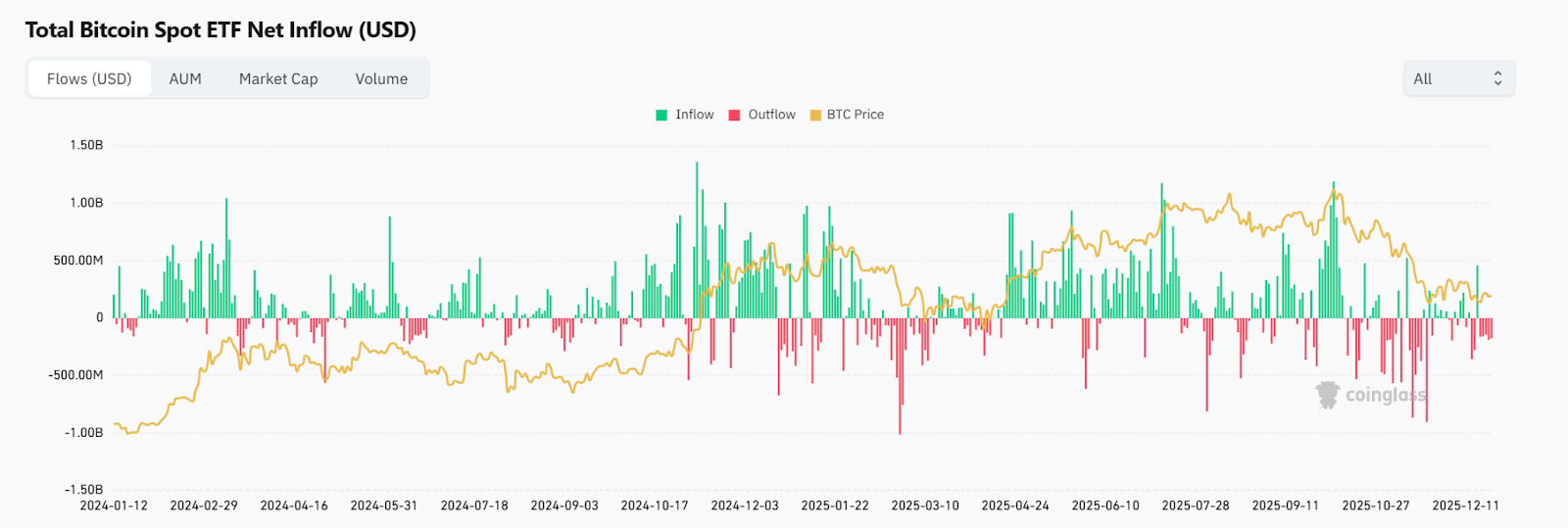
Source: https://www.coinglass.com/bitcoin-etf
Benefiting from accounting standard reforms (allowing crypto assets to be measured at fair value) and a shift in venture capital preferences, a large number of small and medium-sized listed companies have announced plans to follow MicroStrategy's lead, investing a portion of their cash reserves in crypto assets such as Bitcoin and Ethereum, transforming themselves into "Digital Asset Treasury Companies (DAT)." According to CoinGecko data, 193 listed companies have announced crypto treasury plans, raising over $120 billion to purchase crypto assets such as BTC , ETH , SOL , and BNB . Many traditional industry companies are attempting to share in the crypto bull market's profits through this move, and their stock prices have surged several times over due to news of their cryptocurrency holdings.
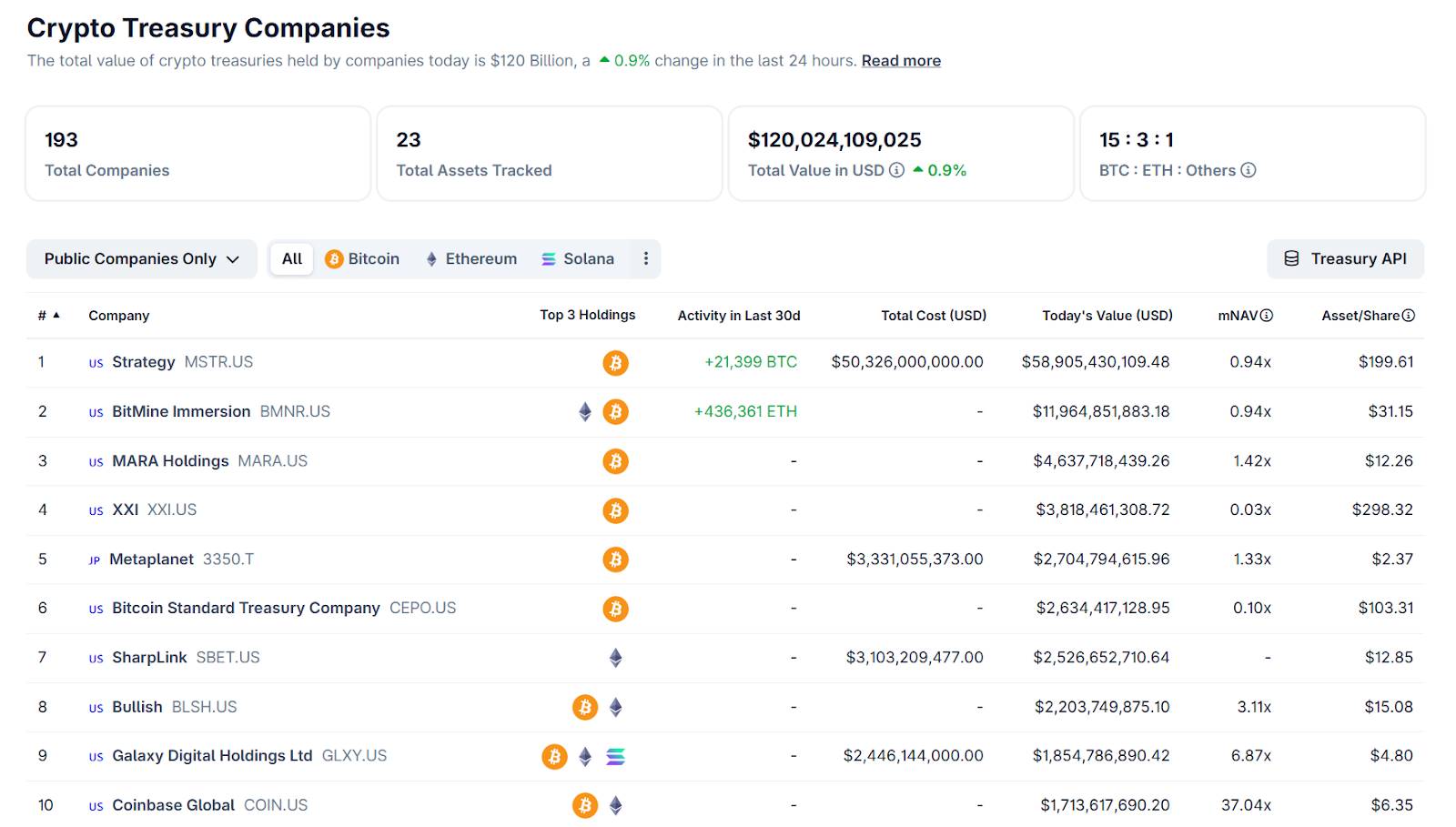
Source: https://www.coingecko.com/en/treasuries/companies
On the institutional investor side, traditional hedge funds and sovereign wealth funds are also showing increased interest in crypto: products such as Grayscale Trust continue to see increased buying in the secondary market, and some sovereign wealth funds in the Middle East and Asia have been reported to have quietly increased their holdings during the fourth quarter's sharp decline in Bitcoin, aiming to build long-term positions at lower prices. Furthermore, the U.S. Department of Labor has relaxed restrictions on retirement plans investing in digital assets in 2025, allowing 401(k) and other retirement plans to allocate a small percentage to approved crypto funds or ETFs, opening the door for a potential influx of trillions of dollars in retirement funds into the crypto market in the future.
In 2025, several traditional financial institutions attempted to introduce stock trading to the blockchain, marking the beginning of the era of on-chain stock trading. Nasdaq and others established pilot programs, issuing tokens of some listed company stocks on permissioned blockchains. xStocks, Ondo, and others launched tokenized stocks and integrated them with mainstream trading platforms. This indicates an accelerated convergence of traditional securities markets and crypto technology, suggesting that in the future, digital assets may not only represent emerging tokens but also encompass on-chain forms of traditional assets.
It can be said that by 2025, traditional finance will have fully embraced crypto assets from the perspectives of regulation, products, and capital. Crypto is rapidly integrating into mainstream investment portfolios, and the "liquidity handshake between Wall Street and the crypto market" has already begun.
II. Market Review: Rollercoaster-like Bull and Bear Market Fluctuations
Overall market characteristics: volatile fluctuations
The crypto market experienced a rollercoaster ride in 2025: at the beginning of the year, it continued the strong upward trend from the end of the previous year, with mainstream coins such as Bitcoin and Ethereum climbing steadily and reaching all-time highs around the third quarter; however, in the fourth quarter, the market quickly slid down amid leverage squeeze and panic, showing a trend of "high at the beginning and low at the end" throughout the year.
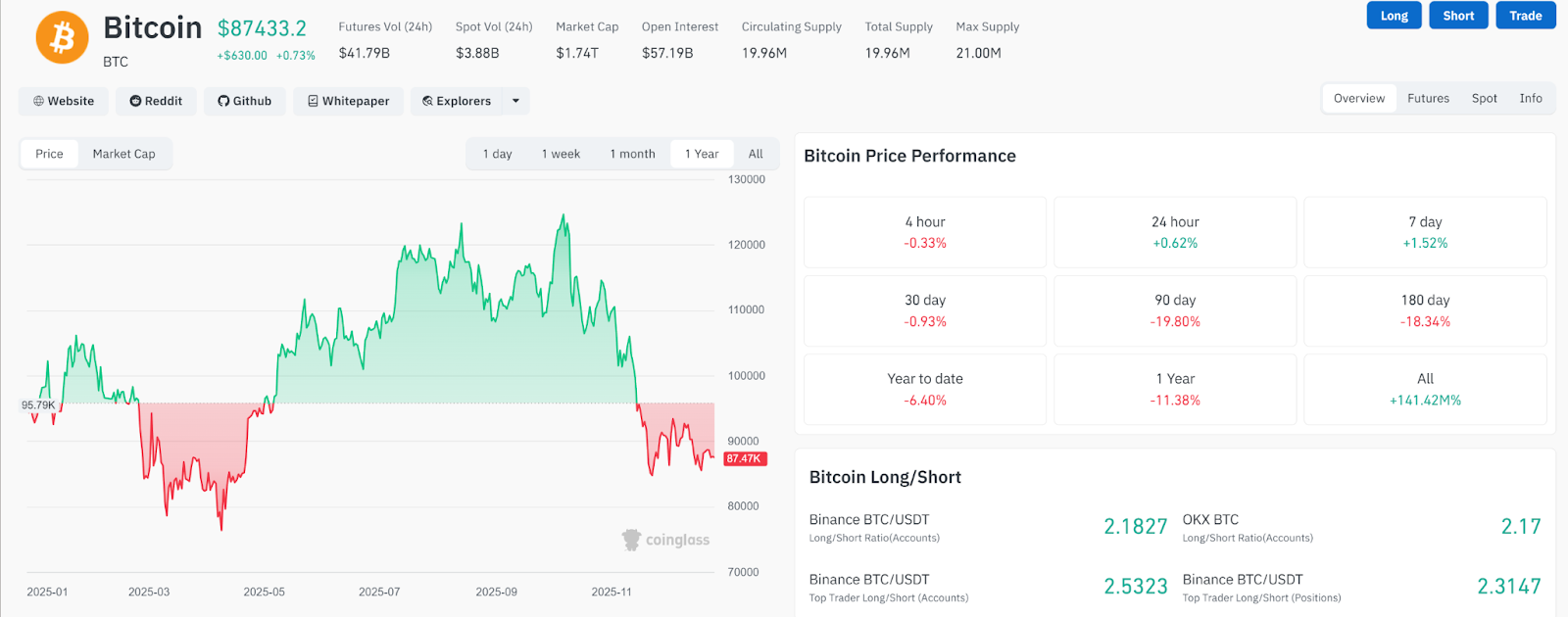
Source: https://www.coinglass.com/currencies/BTC
After breaking the $100,000 mark at the end of 2024, Bitcoin continued its upward momentum. In January 2025, MicroStrategy announced another large-scale purchase of BTC, pushing the price close to $107,000. The market then entered a brief consolidation period, with BTC prices slightly correcting in February and March but remaining consistently above $80,000, preparing for the next surge. With frequent positive news regarding US regulations, continued inflows into ETFs, and the news that the Trump administration intended to designate Bitcoin as a strategic reserve asset, Bitcoin resumed its upward trend in the second quarter. Bitcoin rose from approximately $95,000 at the beginning of the year to around $120,000 at the beginning of the third quarter, an increase of nearly 7-8 times from the 2022 bear market bottom (approximately $16,000). Unlike previous bull markets, this round of gains was relatively stable, without any irrational, frenzied vertical surges. New funds mainly flowed into BTC and a few top-performing assets.
Just when many investors thought the market would continue its upward climb along a "four-year cycle" until the end of 2025, a dramatic turning point occurred. In early October, Bitcoin surged to an all-time high of approximately $126,000 without any apparent negative news. However, on October 11, market liquidity suddenly reversed, with multiple trading platforms experiencing abnormally large sell orders almost simultaneously, triggering a chain reaction of panic selling. Within days, the price of Bitcoin broke through three psychological barriers: $120k, $100k, and $90k, falling to a low of around $80,000, a drop of nearly 37% from its peak. Major cryptocurrencies like Ethereum also plummeted, with the price of ETH falling from around $5,000 to around $3,000. Smaller-cap tokens fared even worse; statistics show that by 2025, the vast majority of Altcoin have fallen by 80% to 99% from their year-to-date highs, with many smaller coins virtually worthless. This tragedy, comparable to the "May 19th crash" in 2021 and the "March 12th crash" in 2020, was dubbed the "October 11th Panic Night" by the industry, marking the abrupt end of the bull market.
Following the crash, the market entered a long recovery period. Bitcoin bottomed out near $80,000 in mid-November before gradually stabilizing and rebounding. By the end of December, the price of BTC had returned to around $90,000. Ethereum hovered around $3,000 at the end of the year, not far from its beginning level. Altcoin, however, suffered greatly: many second- and third-tier coins fell by more than 50% throughout the year, and investor confidence plummeted. In contrast, traditional risk assets such as US stocks only experienced slight corrections during the same period, remaining close to their annual highs. This suggests that the deep pullback in the crypto market in 2025 is more likely due to the bursting of an internal leveraged bubble, rather than being entirely driven by a deteriorating macroeconomic environment.
2. On-chain ecosystem performance
Behind the dramatic fluctuations in market conditions, on-chain data more accurately reflects the changes in capital flows, user behavior, and ecosystem structure in 2025.
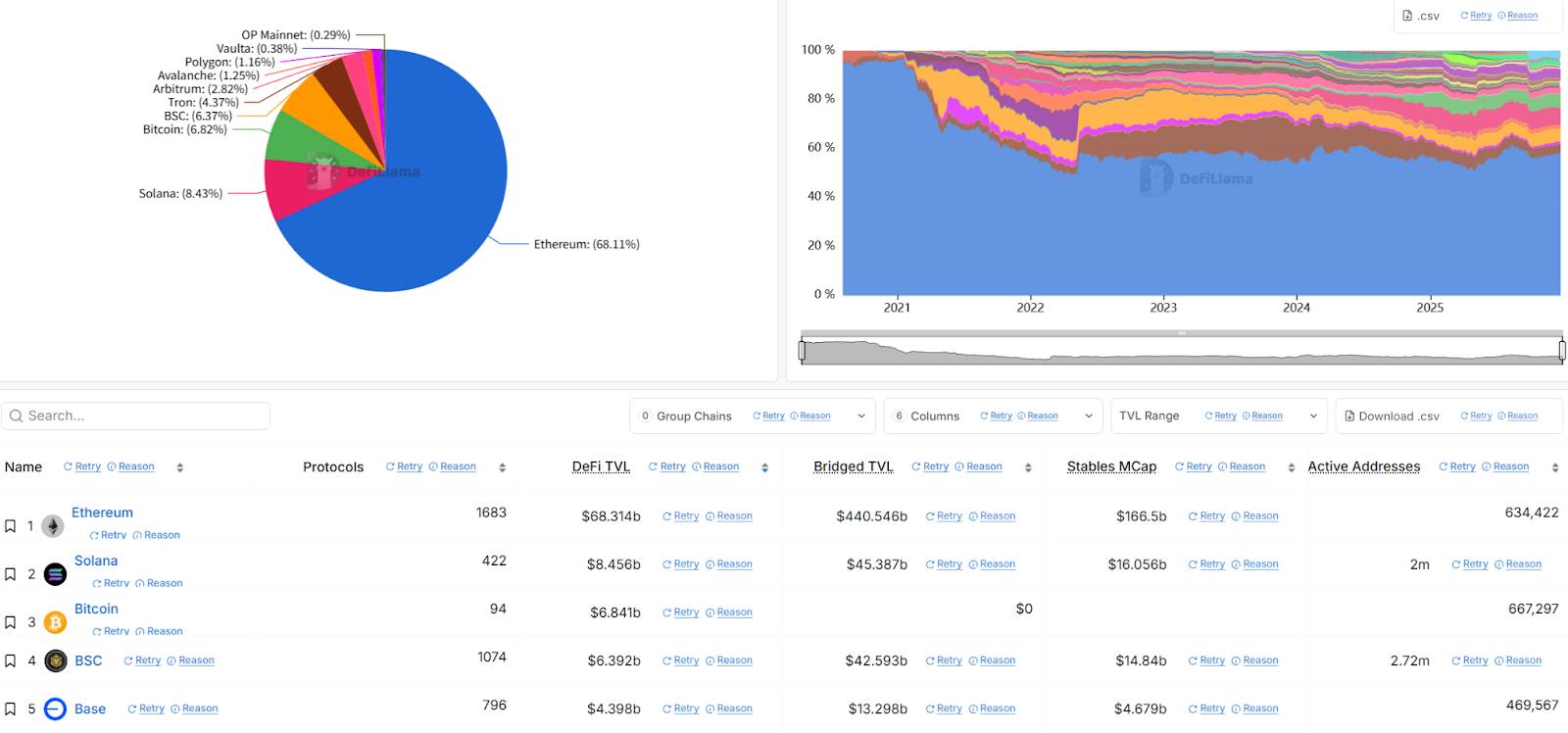
1) The " main chain division of labor" has become more solidified : Ethereum continues to play the role of a secure settlement layer and the foundation for maximum liquidity, while Solana, BNB Chain, and Base are more like "traffic chains" for high-frequency trading and consumer applications. From the perspective of DeFi TVL, Ethereum will still maintain its position as the core asset throughout the year, and its on-chain stablecoin scale will remain in an absolute leading position at the end of 2025.
Source: https://defillama.com/chains
2) Structural migration of transaction volume and user activity : Solana repeatedly competed with Ethereum for the top spot in weekly metrics throughout 2025, even briefly taking the lead. BNB Chain handled a large amount of spot and liquidity demand in leading applications such as PancakeSwap, and its on-chain fee structure in 2025 showed "unit fee compression," meaning transactions could be cheaper and more frequent. Base's rise was more "product-oriented": by the end of the year, its on-chain metrics exhibited typical characteristics of "high transaction volume + high active addresses," becoming one of the strongest new traffic entry points in the Ethereum ecosystem.
3) Shifting Trends in Fees/Revenue : In 2025, on-chain transaction fees will no longer be driven solely by L1/L2 itself, but increasingly by applications. Transaction, wallet, and consumer applications are shifting the on-chain narrative from an "infrastructure narrative" to a "cash flow narrative." This explains why on-chain liquidity exhibits a "fast in, fast out" characteristic when Q4 risk events or macroeconomic tightening occur.
4) Stablecoins and yield strategies become the glue that holds the ecosystem together : Ethereum remains the core platform for stablecoins and yield products, and yield-based stablecoins and strategy products saw significant expansion in 2025: Ethena's USDe maintained a scale of several billion US dollars at the end of the year, becoming one of the representative assets of on-chain "dollar-like yield". The yield splitting/yield market, such as Pendle, had accumulated several billion US dollars in TVL by mid-2025, and a large number of combination strategies revolved around yield-based stablecoins such as sUSDe, accelerating the revolving lending chain of "deposit - yield - re-collateralization - re-circulation".
5) Staking and lending remain the primary vehicles for large sums of money : Ethereum-based Lido and Solana-based Jito, among others, are jointly driving the "financialization of staked assets." The lending sector is more focused on efficiency competition between "stablecoins and blue-chip collateral": leading lending protocols continue to absorb collateral and borrowing demand, providing infrastructure for yield strategies and leveraged trading.
6) CEXs entering the on-chain trading arena : Taking Binance Alpha as an example, its core selling point is integrating on-chain discovery and trading within the exchange, weakening the barriers of wallets and gas fees. Bybit Alpha also explicitly strengthened its product path of "account-based on-chain trading" in 2025. Bitget emphasizes a unified on-chain trading portal across multiple chains, further amplifying the hybrid model of "CEXs handling users and risk control, while on-chain entities handle assets and settlement." These products significantly amplify the speed of on-chain asset dissemination and trading frequency during bull markets, but when risks suddenly accelerate in Q4, they also lead to a more concentrated and synchronized withdrawal of liquidity.
Investor sentiment and fund flows: a stark contrast
Investor sentiment in 2025 experienced a rollercoaster ride, shifting from extreme fervor to extreme cold. In the first half of the year, retail investors returned to the market, crypto social media became active again, and various narratives took turns emerging. From AI concepts to memes, there was a constant stream of trending topics. But unlike in the past, the lifespan of these narratives was significantly shorter—themes that could last for months in previous years might now be replaced by the next story after just a few days.
Following the October crash, market sentiment plummeted, with the Greed Index plunging into deep fear territory. By the end of 2025, Bitcoin's 30-day volatility had reached a recent low. However, on-chain data shows that after the October crash, the number of large Bitcoin addresses (holding over 10,000 Bitcoins) began to rise, indicating that long-term funds, such as sovereign wealth funds, were accumulating at low prices. It is foreseeable that the market in 2026 will be more rational and mature than in 2025, and investment styles may shift from chasing trends to long-term value allocation, creating fertile ground for steady growth.
III. Review of Crypto Industry Hot Topics in 2025
Despite significant market price volatility, 2025 was not just about price fluctuations in the crypto space. The year still saw many memorable technological breakthroughs, application innovations, and industry trends that laid the foundation for future development.
1. Institutionalization and Compliance: The Crypto Industry is Mature
2025 is seen by many as a "coming-of-age ceremony" for the crypto industry, marking its transition from a retail-dominated speculative phase to an institutional-driven infrastructure phase. In 2025, institutions became the marginal price setters for crypto assets, with weekly inflows into US spot Bitcoin ETFs exceeding $3.5 billion in the fourth quarter, far surpassing the net inflow of retail trading during the same period.
The entry of institutions has a dual impact: on the one hand, long-term funds have a low risk appetite and low trading frequency, which reduces market volatility and makes pricing more efficient; on the other hand, these funds are highly sensitive to macro interest rates, which makes the crypto market more closely tied to the macro cycle, and prices will be more under pressure once a liquidity tightening environment is encountered.
Compliance is increasingly becoming a moat for crypto projects: platforms with licenses, robust risk control, and regulatory technology architectures gain institutional trust, leading to soaring trading volumes and market share; conversely, non-compliant gray-area platforms will be marginalized or even shut down. For example, the US-compliant exchange Coinbase has seen record-breaking user numbers and revenue, and a number of decentralized compliant financial infrastructures are emerging, such as Ethereum-based decentralized custody solutions.
2. Stablecoins: Bill passed and applications expand
The U.S. stablecoin law establishes that issuers of fiat stablecoins must hold high-quality short-term assets as reserves and be subject to regular audits. This measure has enhanced the credibility of mainstream stablecoins such as USDC and USDT, and has also encouraged more traditional financial institutions to participate in the issuance or use of stablecoins.
The total on-chain stablecoin transaction volume reached a staggering $46 trillion throughout the year, making it arguably the "killer application" of the crypto space. However, several stablecoin-related risk events also occurred during the year, including those involving USDe, xUSD, deUSD, and USDX. For instance, the high-yield algorithmic stablecoin XUSD, due to its over-reliance on intrinsic leverage, collapsed to $0.18, resulting in user losses of nearly $93 million and leaving behind $285 million in bad debt for the protocol. These incidents serve as a reminder to the industry to be cautious about the complex design of stablecoins.
However, overall, stablecoins backed by fiat currency reserves have a more solid position. At the end of 2025, the circulating market capitalization of USD-denominated stablecoins continued to grow steadily, with new scenarios constantly emerging: businesses are using stablecoins for cross-border trade settlements to avoid the high costs and delays of SWIFT; consumers are using stablecoins for daily shopping through third-party payment platforms; and residents of some high-inflation countries in Latin America and Africa are using USD-denominated stablecoins as savings accounts. Forbes' outlook indicates that by 2026, stablecoins will be ubiquitous, further penetrating traditional financial transactions and corporate treasury management.
3. RWA: From Concept to Reality
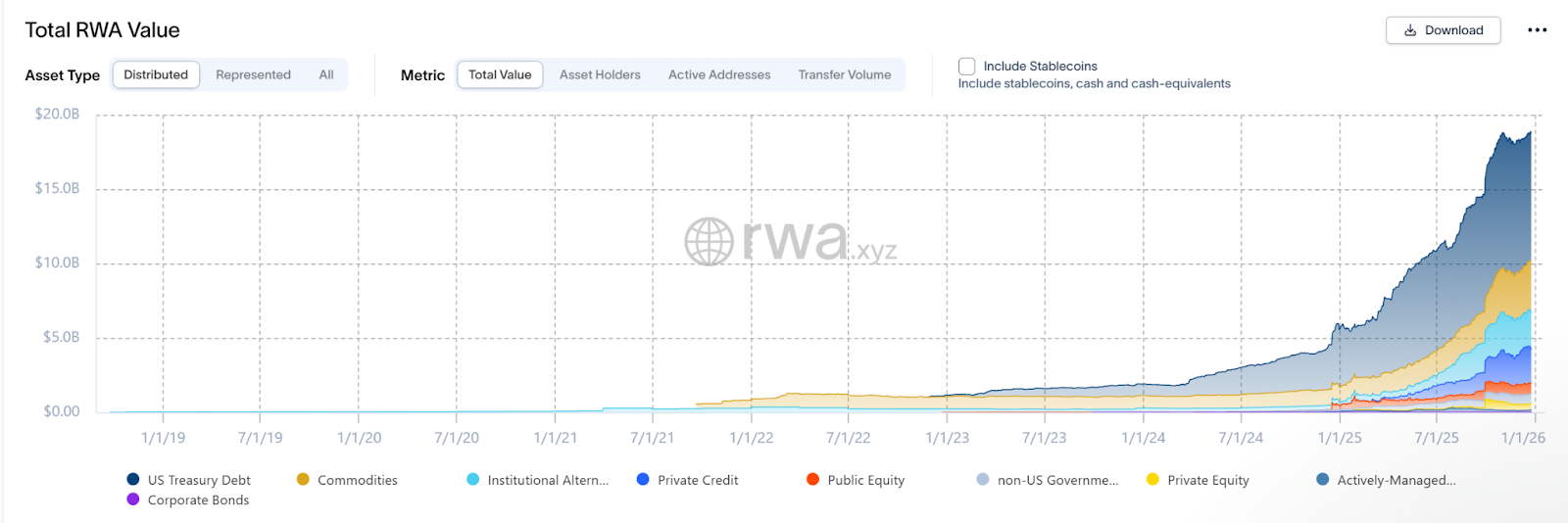
2025 witnessed the transformation of Real-World Asset Tokenization (RWA) from a hype concept to large-scale implementation, truly becoming an important part of the crypto capital market. As institutions sought to generate traditional returns on-chain, real-world assets such as government bonds, real estate, and stocks were increasingly tokenized and moved onto the blockchain. According to statistics, by the end of 2025, the total market capitalization of various RWA tokens exceeded $19 billion. Approximately half of this market capitalization came from tokenized products of US Treasury bonds and money market funds. BlackRock issued $500 million in tokenized US Treasury bonds (ticker symbol BUIDL) via blockchain. Meanwhile, established Wall Street institutions such as JPMorgan Chase and Goldman Sachs moved their RWA infrastructure from trials to production. JPMorgan's Onyx and Goldman Sachs' GS DAP platforms began handling actual transactions, processing corporate loans, accounts receivable, and other assets on-chain.

Source: https://app.rwa.xyz/
Stablecoin issuers are also riding the wave of RWA: the companies behind USDT and USDC are increasing their holdings of short-term US Treasury bonds as reserves to improve transparency; the decentralized central bank MakerDAO is introducing on-chain commercial paper and government bonds into its DAI collateral pool, with real-world revenue supporting the stablecoin supply. Stablecoins backed by government bonds are becoming the carrier of the digital dollar. The biggest breakthrough for RWA in 2025 lies in the shift in investor mentality: people are no longer satisfied with buying synthetic tokens pegged to gold and stocks, but are directly buying assets natively issued on-chain.
The RWA boom has also spurred the development of specialized platforms and protocols. A number of blockchain projects have emerged serving the issuance, clearing, and trading of real-world assets. Some focus on real estate tokenization (selling small tokens of property ownership), others on NFT-based art and collectibles, and still others offer comprehensive compliant issuance and custody solutions. Oracles play a crucial role in RWA; on-chain data needs reliable sources to reflect the value of off-chain assets, driving collaboration between oracle networks and traditional data providers. A direct benefit of the RWA wave is the broadening of collateral options in DeFi: previously, DeFi lending only accepted crypto assets; now, some protocols are accepting rigorously risk-controlled RWA tokens as collateral, such as government bond tokens used to mint stablecoins or lend funds. This connects on-chain and off-chain capital markets, giving DeFi greater stability.
Artificial Intelligence × Blockchain: The Realization of the AI Economy
In 2025, the integration of AI and blockchain entered the stage from proof-of-concept to initial implementation. Of particular note is the combination of autonomous intelligent agents (AI agents) and the crypto-economy. This year, we witnessed new paradigms such as AI-driven decentralized autonomous organizations, AI executing smart contract transactions, and AI models participating in economic activities as blockchain users.
Driven by major companies like Coinbase, Google, and Salesforce, the X402 has rapidly gained popularity. It enables AI to automatically pay for accessing online resources, achieving low-cost, near-instantaneous automatic payments—perfect for AI's high-frequency, small-amount transactions. Numerous startups have developed around the X402, such as AI model training data marketplaces that allow models to autonomously purchase data; and IoT devices using the X402 to automatically pay maintenance service fees. The X402 has opened the door to an AI-driven economy, granting machines economic identity and autonomous transaction capabilities.
Beyond payments, AI applications in blockchain governance and investment are also making progress in 2025. AI governance DAOs are emerging: projects are introducing AI decision-making assistants to help analyze proposals, detect contract vulnerabilities, and even automate some operational decisions. AI trading agents are attracting significant interest from quantitative investors. Some funds are training AI models to read on-chain sentiment indicators and macroeconomic data, automatically executing arbitrage and hedging strategies. While AI trading still faces challenges related to opacity and regulation, its advantages in speed and big data analytics are beginning to emerge.
The integration of AI and blockchain has also given rise to new token economic models. Some AI projects have issued utility tokens, granting holders the right to access AI services; for example, holding a token of an AI computing network can be exchanged for computing power. Similarly, some content platforms use AI to generate works and sell them as on-chain NFTs, with buyers simultaneously gaining the right to increased revenue as the AI undergoes continuous iterative training. Although many AI+blockchain projects were overvalued in the early stages of the bull market and subsequently plummeted as the market cooled, some leading projects have proven their value. For instance, AI security auditing tools and AI risk control model services are in high demand among B-end clients, generating real revenue and supporting the intrinsic value of their respective tokens.
DeFi Ecosystem: The Rise of Perp DEX and Prediction Markets
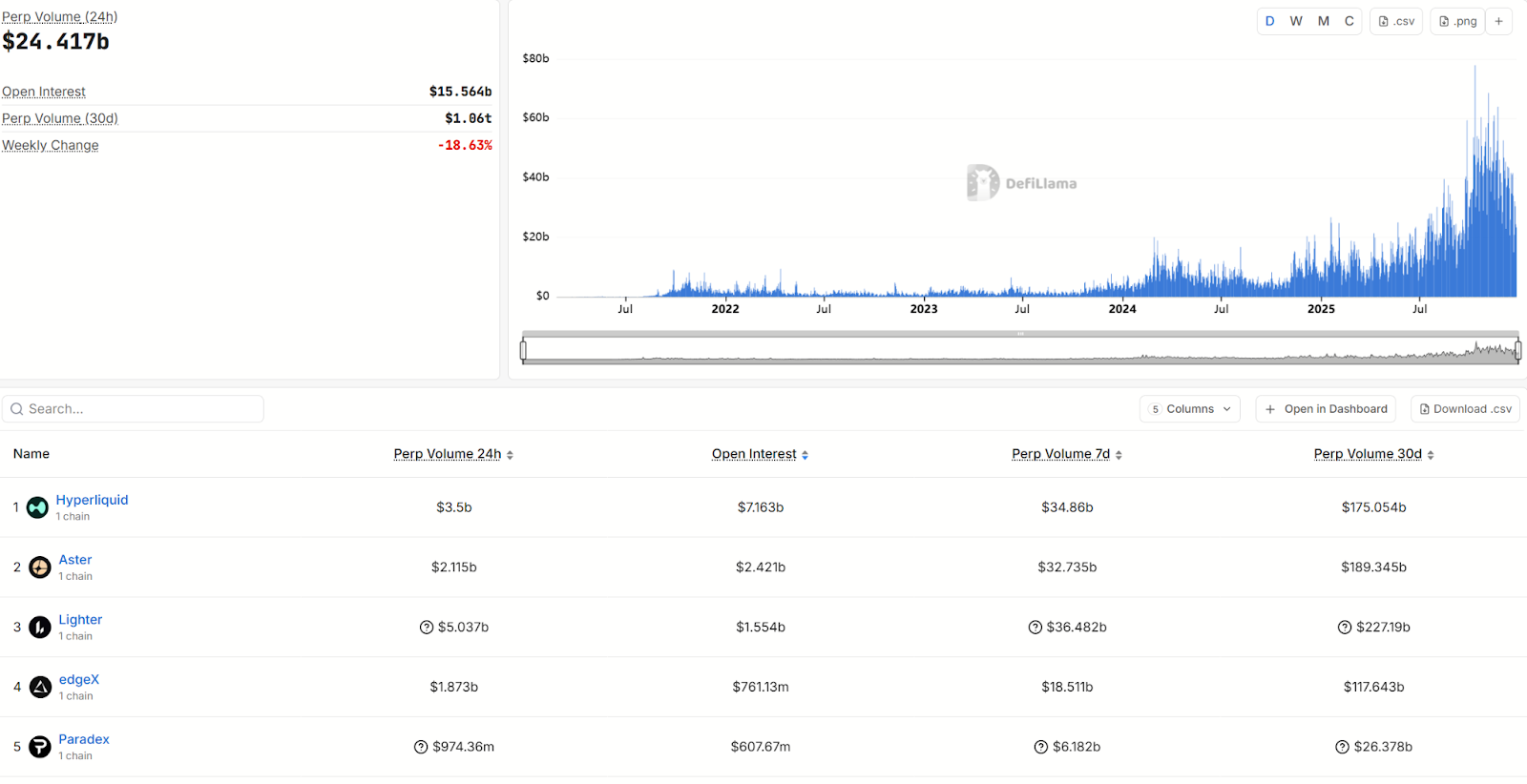
Perpetual contract decentralized exchanges (Perp DEXs) have become an undeniable force in the derivatives market. Leading Perp DEXs such as Hyperliquid and Aster saw record-breaking trading volumes in 2025, attracting numerous liquidity providers and market makers with incentives such as transaction mining and fee rebates. A series of data points show that total decentralized derivatives trading volume reached an all-time high in 2025, demonstrating that DeFi derivatives have evolved from an early niche experiment into a systemically important market component.
Source: https://defillama.com/perps
The rise of prediction markets was another major event in the DeFi space in 2025. Benefiting from the CFTC's inclusive attitude and a surge in user interest in event betting, prediction platforms like Polymarket saw a dramatic increase in trading volume, becoming one of the fastest-growing vertical sectors. Prediction markets effectively take on some of the functions of traditional financial options and betting markets. Beyond entertainment-oriented political or sports predictions, businesses can use prediction markets to hedge performance risks, while investors can leverage them to hedge against the uncertainty of macroeconomic events. This expands the application boundaries of DeFi.
Another significant trend in DeFi in 2025 was the rise of yield-based and structured products. Traditional financial institutions began exploring DeFi lending protocols to improve capital utilization, such as participating in lending within cross-border trade finance. Simultaneously, to meet the needs of institutions seeking stable investments, a number of structured yield-based DeFi products emerged: for example, combining options and lending to generate two types of tokens—one with fixed income and the other with enhanced income—achieving a tiered interest rate market. These innovations have shifted DeFi from simply pursuing high returns to more sophisticated risk pricing.
However, various hacker attacks continued to occur in 2025. Balancer V2 suffered a loss of approximately $128 million in assets across mainnet and forked projects due to a contract vulnerability. Some stacked variants of decentralized Lego collapsed—for example, complex yield aggregators and algorithmic strategy protocols, due to excessive leverage and opaque manipulation, experienced runs on tokens as the bull market turned bearish, causing their prices to plummet to zero. Some InfoFi projects also experienced dramatic rises and falls: these platforms claimed to generate revenue through user-contributed information, but after excessive expansion in the first half of 2025, they quickly collapsed because their models became unsustainable, and user attention was consumed by a large amount of low-quality AI content and fraudulent activity.
SociaFi and NFTs: New Attempts at Combining Traffic and Content
In 2025, the exploration of "SocialFi" continued, with some new attempts emerging, such as content creator DAOs: turning authors' works into NFTs and crowdfunding to support them, allowing for transparent distribution of content creation revenue. However, overall, SocialFi did not see any revolutionary breakthrough applications, and the general public still mainly obtained encrypted information through centralized platforms.
The NFT sector also became more rational in 2025. Following the frenzy of 2021 and the downturn of 2022-2023, the NFT market did not experience a new overall bubble in 2025, but several sub-sectors performed exceptionally well. First, high-end art and luxury NFTs saw steady growth, with several top auction houses successfully holding dedicated NFT auctions. Renowned artists continued to embrace blockchain works, and NFT art gradually gained acceptance within the traditional art world. Some blue-chip NFTs maintained strong prices even during the bear market. Second, utility-based NFTs emerged, such as music copyright NFTs and ticketing NFTs, providing holders with ongoing rights or services, thus establishing a foundation for value preservation. The gaming NFT sector also saw new explorations, with some games adopting a "free NFT + in-app purchase" model to lower the user barrier and then enhancing user stickiness through on-chain asset interoperability.
IV. Outlook for 2026: A New Chapter Poised for Takeoff
After the dramatic ups and downs of 2025, what will the crypto market look like in 2026? Based on macroeconomic trends and structural changes in the industry, we offer the following forecast for next year:
1. Macroeconomic Environment: Opportunities for Liquidity Reshaping
The expectation that the Federal Reserve will enter a rate-cutting cycle will continue to materialize in 2026. If the US economy slows significantly, the rate cuts next year may exceed current expectations. This easing monetary environment will provide liquidity to risk assets, including Bitcoin, and global liquidity is expected to expand again.
Meanwhile, the geopolitical and trade environment remains uncertain, but fiscal stimulus policies are expected to take effect, and global risk appetite is likely to remain high. However, it is worth noting that traditional markets such as US stocks have already accumulated significant gains by 2025, and some sectors (such as AI concept stocks) may have potential bubble risks. If traditional assets experience a correction in 2026, it could have a short-term drag on the crypto market.
Therefore, the impact of macroeconomic factors on crypto will be two-sided: loose liquidity and rising inflation will benefit the value store logic, but if the stock market bubble bursts and risk aversion intensifies, crypto will also be affected. Overall, the macroeconomic background in 2026 is more positive than in 2025, but close attention still needs to be paid to the transmission of risks across markets.
2. Policy and Regulation: Deepening Global Competition and Cooperation
The United States will continue to act as a bellwether for crypto policy in 2026. The Trump administration is expected to maintain its friendly stance from 2025 and may even push for bolder initiatives, such as considering including Bitcoin in the national reserve. Congress may reach further consensus on the definition of security tokens and the powers of the SEC/CFTC, legalizing numerous "gray area" projects.
The EU may launch discussions on MiCA 2.0, covering new regulations for DeFi and NFTs; Hong Kong and Singapore will compete to attract Web3 companies, offering more competitive tax and licensing conditions; countries like Japan and South Korea may relax listing restrictions on certain tokens to revitalize their domestic crypto industries. International regulatory cooperation will also strengthen, especially in areas such as anti-money laundering and cross-border regulation of stablecoins. It is expected that by 2026, countries will attempt to establish common stablecoin regulatory standards and discuss a framework for the coexistence of central bank digital currencies (CBDCs) and privately held stablecoins. More broadly, the issue of the systemic importance of the crypto market may be on the agenda—as the market capitalization of crypto increases its correlation with traditional finance, regulators will incorporate crypto into their macro-prudential management framework and develop contingency plans for extreme scenarios.
In short, the regulatory tone for 2026 is likely to be one of "normalcy": no longer fearing it, nor blindly pursuing it, but rather treating it as part of the financial system and regulating it accordingly. This is undoubtedly good for the long-term healthy development of the industry. Of course, some regions may still see setbacks or tightening, and in the event of major fraud or money laundering cases, the short-term regulatory response may be strong.
3. Institutional Deepening: Further Mainstream Integration
2026 is expected to see more diverse institutional entry methods. Firstly, retirement giants like 401(k) plans may, with policy approval, officially launch Bitcoin/Ethereum allocation options for retirement accounts, ushering in a new era of long-term dollar-cost averaging. It is estimated that even if only 1% of US pension funds flow into crypto, the potential scale is in the hundreds of billions of dollars, becoming a significant force driving the next long-term bull market. Secondly, sovereign wealth funds and commercial banks worldwide are expected to increase their exploration of digital assets. Reserve funds in some countries may follow the example of Singapore and the UAE, directly investing in Bitcoin ETFs or supporting the issuance of their own digital currencies; large banks in Europe and the US may launch digital asset custody and brokerage services within a compliant framework, incorporating crypto as a standard asset class into their wealth management.
In 2026, the industry is expected to see continued improvements in both product innovation and compliance regulations: more structured products (such as volatility ETFs and yield tokens) will emerge to meet the needs of clients with different risk appetites; simultaneously, exchanges and custodians will strengthen transparency and capital requirements to ensure that stampede tragedies are not repeated. Institutional participation will increasingly change the market ecosystem—trading will be dominated by large-scale over-the-counter transactions and ETFs, volatility will decrease, and Bitcoin's safe-haven and macro asset attributes will become more prominent. As Forbes analysis suggests, with a broader and more institutionalized market, Bitcoin's four-year cycle of dramatic ups and downs will become history, replaced by a continuous and gradual upward trajectory. For investors, while this may mean fewer get-rich-quick stories, it also means a more mature and reliable asset class, making it more readily embraced by traditional investors on a large scale.
4. Technology and Application: Six Structural Forces Pave the Way
Six major structural forces are likely to drive the next phase of evolution in the crypto market in 2026:
1) Value Store of Value and Financialization: The further financialization of Bitcoin, Ethereum, and other cryptocurrencies, along with the maturing derivatives and lending markets, brings them closer to the performance of traditional assets like gold. As volatility decreases, they will attract more conservative capital allocation, leading to increased global adoption. Grayscale Research predicts that BTC will reach a new high in 2026, targeting $250,000. The magic of Bitcoin's halving cycle may fade, but its status as digital gold will be firmly established.
2) Stablecoin Boom: Stablecoins may experience a full-blown boom in 2026. Large tech companies may build their own stablecoin ecosystems, and more countries will allow banks to directly hold stablecoins for settlement. Mainstream payment networks like Visa and Mastercard may integrate stablecoins into their clearing processes, enabling seamless on-chain and off-chain payments. Simultaneously, a reshuffling will occur—small, uncompetitive stablecoin projects will be eliminated, and the market will concentrate on leading stablecoins like USDT, USDC, USD1, and PYUSD. Businesses and individuals can bypass the banking system to achieve instant global fund transfers, opening up channels for cross-border capital flows.
3) Asset Tokenization: The trend of putting physical assets on the blockchain is accelerating. Some large exchanges may even partner with blockchain platforms to launch tokenized securities sections that trade 24/7, providing services to global investors. The sophistication of financial products will also be further advanced, with more innovative ETFs and funds (such as composite ETFs that include Bitcoin futures and technology stocks) emerging, giving investors more choices.
4) DeFi and TradeFi Integration: Deep integration between banks and DeFi is becoming the new normal. We may see the first DeFi loan product issued by a bank, or Visa launching an enterprise-grade payment smart contract platform based on Ethereum. DeFi features such as dynamic yields and prediction markets will be embedded in traditional financial services. For example, an insurance company might use decentralized oracles and on-chain data to automate claims processing; these are examples of traditional finance "going on-chain." On-chain governance and compliant DAO concepts may be piloted within enterprises to improve efficiency and transparency.
5) Deep Integration of AI and Cryptography: As discussed earlier, the nascent AI economy has emerged, and 2026 is expected to see widespread participation of AI agents in economic activities. The X402 protocol may become an industry standard, widely applied to IoT and Web service payments. AI-driven on-chain investment advisors and risk control models will become more mature, and perhaps in 2026, some funds will begin to publicly promote their use of AI algorithms for investment decisions. In the next cycle, the AI narrative will no longer be just storytelling, but a sector supported by tangible applications and profitable models.
6) Privacy and Security Infrastructure: Privacy technologies may see breakthroughs in 2026 as institutions and mainstream users place greater emphasis on privacy. Several zero-knowledge proof and multi-party computation projects will be commercialized, providing solutions for compliant privacy-preserving transactions and data sharing. Regulators may also allow the existence of privacy exchanges or privacy stablecoins within specific frameworks, serving compliant users who require anonymity (such as for confidential corporate transactions). In terms of security, 2026 is likely to be stable, but continued attention should be paid to cryptographic upgrades under the threat of quantum computing, as well as progress in social engineering and on-chain monitoring.
V. Outlook and Conclusion
Market Outlook: Bull Market, Bear Market, or Transformation?
Opinions differ regarding the market outlook for 2026. Some believe the market peaked in October 2025, maintaining the four-year cycle, and predict a prolonged bear market in 2026, even forecasting a drop in Bitcoin to the $50k-$60k range to find a bottom. These views are based on the lagging effects of macroeconomics and market inertia, assuming that institutions will also follow the cyclical rhythm. However, investors, represented by institutions and long-term asset management firms, firmly believe that this cycle is not yet over and may even be prolonged: they point out that continued institutional buying will extend the cycle to 4.5 or 5 years, and that the current 30% pullback is merely a normal correction within a bull market, believing the bullish trend will continue throughout 2026 and drive BTC to new highs.
Our comprehensive assessment suggests that the crypto market in 2026 is poised to emerge from a new paradigm of "weak cyclicality and a long bull market": it will no longer simply replicate the past pattern of sharp rises and falls, but rather experience several moderate-amplitude fluctuations in line with macroeconomic trends, with a higher central value, potentially resulting in positive returns for the year. In other words, barring a severe global economic recession or black swan event, Bitcoin, Ethereum, and other cryptocurrencies are highly likely to be priced higher in 2026 than at the beginning of the year. Strategy reports from major investment banks like BlackRock also support this view: they anticipate that with reduced volatility in 2026, crypto will gradually integrate into traditional asset allocation logic, and even without a dramatic surge, it will be a year of continuous ecosystem restructuring. Of course, investors still need to be wary of potential risks, including regulatory uncertainties (political factors in an election year), technological vulnerabilities, and unpredictable events in the macroeconomic market.
Conclusion
Looking back at 2025, the crypto market oscillated wildly between frenzy and despair. We witnessed record highs and sudden market crashes; we saw greed and fear alternately dominate the market, while innovation and change quietly accumulated strength. Whether it's the shift in regulation, the entry of institutions, or the rise of new narratives like RWA, AI, and prediction markets, all indicate that the crypto industry is maturing step by step. The year 2026, which we are about to enter, may not see the same dramatic euphoria and despair as previous cycles, but rather a steady progress through rationality and development. This may not be a bad thing for investors: fewer get-rich-quick schemes, more long-term value; fewer illusions, more solid implementation. When the bubble bursts, truly excellent projects and assets will stand out more. Let us embrace cautious optimism and welcome the next iteration of the crypto market. In 2026, a magnificent chapter in the crypto world awaits our joint writing.
about Us
Hotcoin Research, the core research arm of the Hotcoin exchange, is dedicated to transforming professional analysis into practical tools for your investment decisions. We analyze market trends through our "Weekly Insights" and "In-Depth Research Reports"; and our exclusive "Hotcoin Selection" (AI + expert dual screening) helps you identify potential assets and reduce trial-and-error costs. Every week, our researchers also host live streams to discuss hot topics and predict trends. We believe that warm support and professional guidance can help more investors navigate market cycles and seize the value opportunities of Web3.