1. Macroeconomic Perspective
Macroeconomic
After entering January 2025, the global economic landscape is still affected by policy uncertainties. Recent market dynamics have highlighted the risks that the US's aggressive trade policies may bring. The optimistic sentiment about US economic growth remains high, and its economic momentum is still strong. However, the increasingly tightening financial environment in the US and the ongoing geopolitical and economic uncertainties are still important factors that need close attention.
Labor Market
The US labor market has continued to show remarkable resilience. In December 2024, 256,000 new jobs were added, significantly exceeding the 156,000 expected by economists. This performance put a strong finish to the year, with an average monthly increase of 186,000 jobs throughout the year. In addition, the unemployment rate fell from 4.2% in November to 4.1% in December, showing a positive trend. Although economic growth is expected to slow slightly in the coming months, the strong labor market is expected to provide critical support in the face of economic headwinds.
Inflation
Inflationary pressures showed signs of easing in December. The Consumer Price Index (CPI) rose 2.9% year-on-year, the third consecutive month of increase. The core CPI, which excludes volatile energy and food components, rose 3.2% year-on-year, slightly lower than the previous month's level and the 3.3% forecast by economists. The tightening of financial conditions is expected to dampen demand and bring inflation closer to a sustainable growth level. This process is expected to create favorable conditions for inflation to gradually approach the Federal Reserve's 2% target.
Stock Market
President Trump begins his second term, proposing a comprehensive plan to expand oil production, restrict immigration, and impose additional tariffs. The "Trump trade" has seen volatile swings as investors assess the series of executive orders signed by President Donald Trump within hours of taking office. As Wall Street sees Trump's comments and first-day actions on international trade as milder than expected, the stock market has generally risen. The yield on the 10-year US Treasury bond is approaching the recent peak of around 4.80%, reflecting the market's high concern about "sticky" inflation dynamics and potential government tariff announcements.
Earnings Season
The financial results of major US banks have outperformed market expectations, with three institutions reporting a doubling of fourth-quarter earnings year-over-year. Analysts currently expect earnings per share (EPS) of the S&P 500 index to grow about 12% in the fourth quarter of 2024. Although macroeconomic signals are somewhat mixed, the overall picture still shows strong economic momentum. GDP forecasts have been revised upward, monetary policy is gradually easing, and risk sentiment is positive. We expect limited upside potential for this quarter's forecast. The impressive bank earnings last week have set a good start for the earnings season.
Summary
The economic development of the US and the world still has a high degree of uncertainty. The policies of the government under President Trump are a key source of this unpredictability, with the scope, timing, and intensity of policy implementation being important variables. In addition, ongoing geopolitical challenges, including the conflict in Ukraine and dynamics in the Middle East, may impact the broader global landscape.
As the 47th President of the United States, Trump's inauguration marks the beginning of a rapid policy shift. It is reported that he has prepared more than 100 executive orders, far exceeding the 17 orders signed by his predecessor, President Biden, on the first day. Although major macroeconomic legislation may take months to be implemented, the initial policy landscape is expected to change quickly.
2. Crypto Market Overview
Token Data Analysis
Trading Volume & Daily Growth Rate
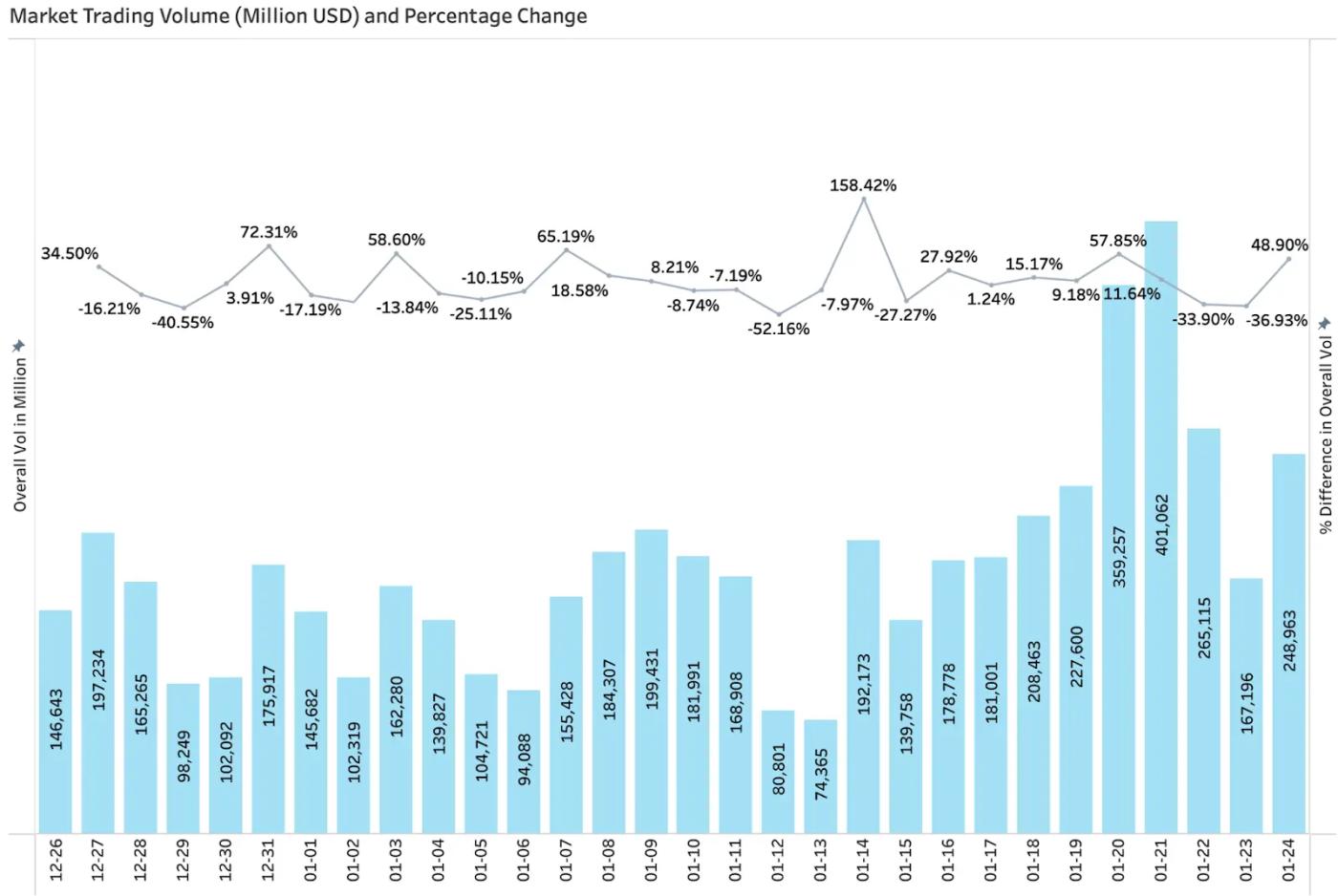
According to CoinGecko data, as of January 24, the trading activity in the crypto market has declined over the past month, with a daily average trading volume of $174.9 billion, down 40% from the previous week's average level. On January 20, the market trading activity rebounded somewhat due to the impact of Trump's inauguration.
Total Market Cap & Daily Growth
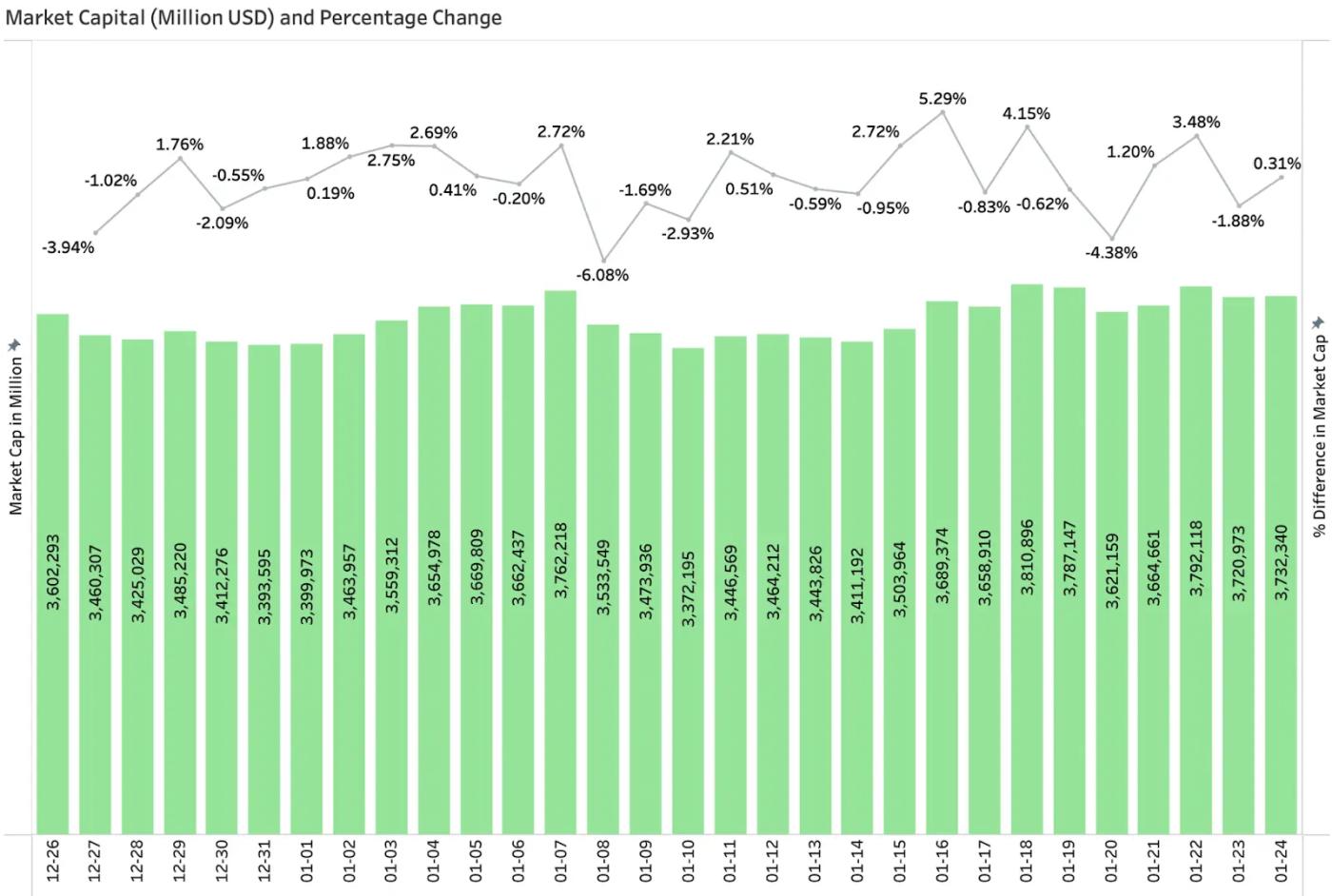
According to CoinGecko data, as of January 24, the total cryptocurrency market capitalization was $3.73 trillion, up 10% from the previous month. Among them, BTC's market share was 57.4%, and ETH's market share was 11.3%. Affected by price weakness, market sentiment, and the strong competition from Solana, ETH's market share has declined slightly.
January's New Hot Tokens
Among the new hot tokens launched in January, TRUMP's market capitalization soared to $14.74 billion after being listed on DEX, setting a record for the fastest exchange listing. The next day, the MELANIA token, representing Melania Trump, was also launched, sparking market discussions about the "Yang conspiracy" of the Trump family and triggering a wave of celebrity meme FOMO.
Token | Token Fullname | CoinGecko/CoinMarketCap | Exchange |
|---|---|---|---|
TRUMP | OFFICIAL TRUMP | BiMart, Binance, OKX, Coinbase, Bybit, Bitget, HTX, Kucoin, Gate, Mexc, Lbank, Phemex, Poloniex | |
MELANIA | Official Melania Meme | BiMart, Bitget, HTX, Kucoin, Gate, Mexc, Lbank, Phemex | |
BIO | Bio Protocol | BiMart, Binance, OKX, Bitget, HTX, Kucoin, Gate, Mexc, Phemex | |
PLUME | Plume | BiMart, Bybit, HTX, Bitget, Kucoin, Gate, Mexc | |
SONIC | Sonic SVM | BiMart, OKX, Bybit, Bitget, Kucoin, Gate, Mexc, Lbank, Phemex | |
BUZZ | Hive AI | BiMart, Bitget, HTX, Gate, Mexc, Lbank, Phemex, Poloniex | |
SOLV | Solv Protocol | BiMart, Binance, Bybit, Bitget, HTX, Kucoin, Gate, Mexc, Lbank, Phemex | |
GPS | GoPlus Security | BiMart, Bybit, Bitget, Kucoin, Gate, Mexc, Phemex |
3. On-Chain Data Analysis
3.1 Analysis of BTC and ETH ETF Inflows and Outflows BTC ETF inflows of $14.16 billion in January
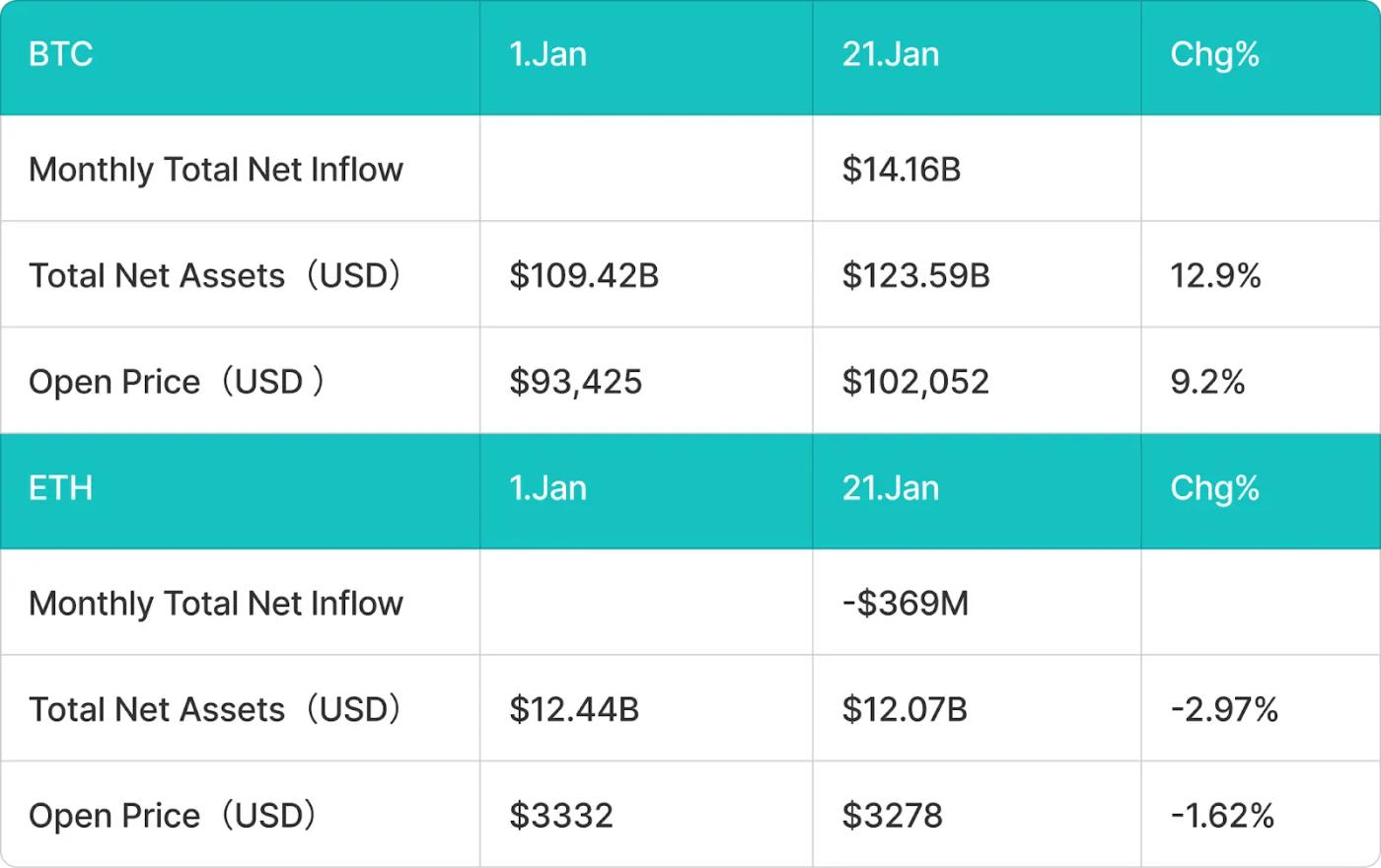
In mid-December, the BTC price did not experience a significant impact after a brief correction. The stimulative effect of Trump's economic policies continued. On January 20, with Trump's formal inauguration, the BTC price was given a strong boost and achieved a significant increase. BTC ETF capital inflows continued to increase in January, reaching a total of $14.16 billion, driving the BTC price to rise from $93,425 to $102,052, an increase of 9.2%. Furthermore, on January 20, the BTC price further surged to a new historical high of $108,228, demonstrating the market's strong confidence in BTC and the growing demand for it as a safe-haven asset in the current macroeconomic environment.
ETH ETF had a slight outflow of $369 million in January
Compared to BTC, the market performance of ETH this month remained sluggish. ETH ETF capital had a slight outflow of $369 million, a decrease of 2.97% year-over-year. The price declined from $3,332 at the beginning of the month to $3,278, a drop of 1.62%. On December 17, when BTC reached a historical high of $108,135, the ETH price was $4,078. However, on January 20, when BTC set a new record high, the ETH price had fallen to $3,439, indicating a persistent downward trend. Even the positive news of Trump's inauguration was unable to change the market's relatively cautious investment attitude towards the Ethereum ecosystem.
3.2 Analysis of Stablecoin Inflows and Outflows
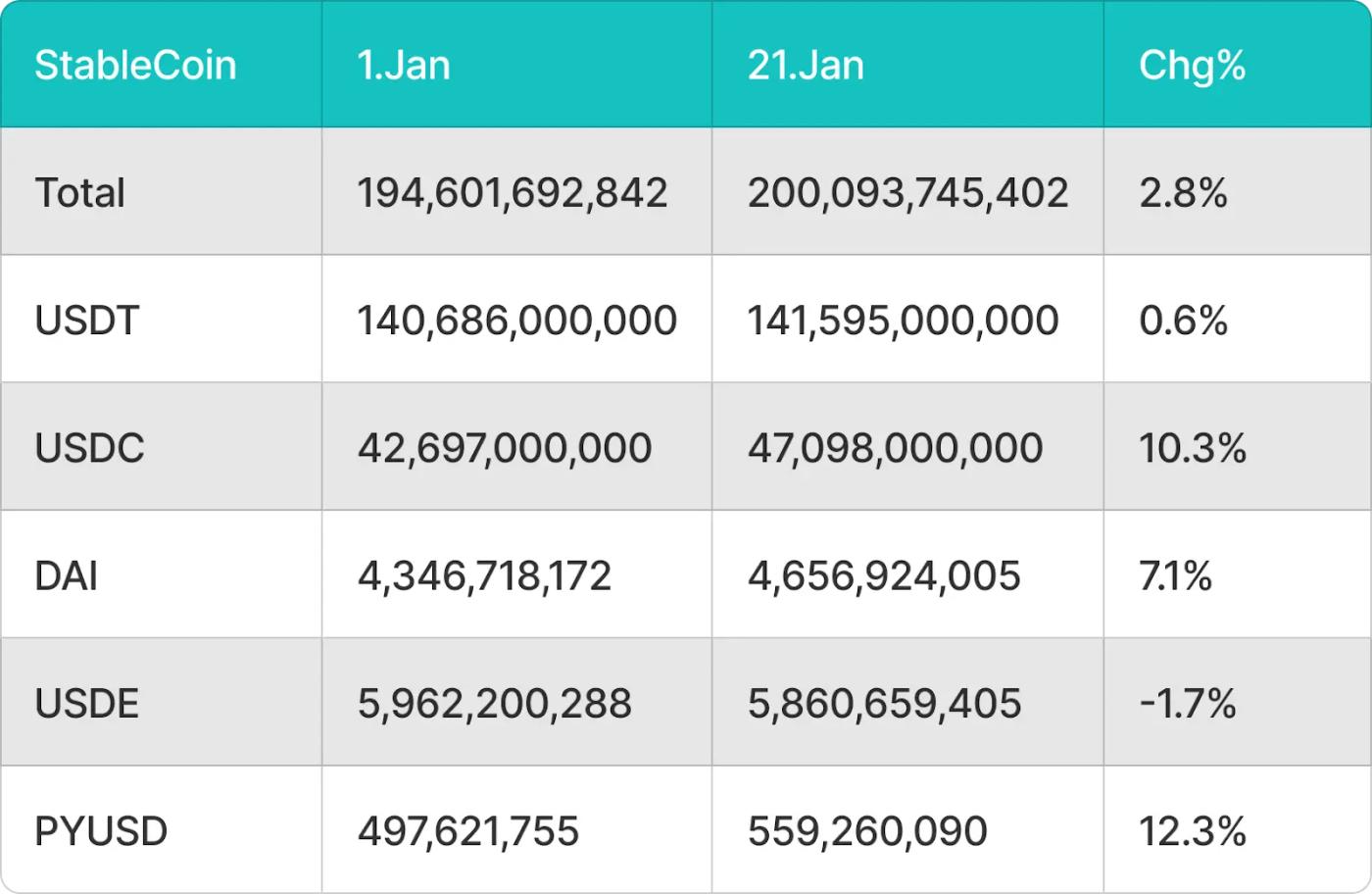
Stablecoin inflows of approximately $5.492 billion in January—mainly from USDC, USDT, and DAI
The stablecoin market continued its strong growth momentum in January, with the stimulative effect of Trump's economic policies further driving its performance. USDC became the main driver of growth this month, with its circulating supply increasing by about $4.3 billion, occupying an important share of the stablecoin market expansion. The positive news of Trump's inauguration prompted a large influx of US capital into the crypto market.
4. Price Analysis of Major Currencies
4.1 BTC Price Change Analysis
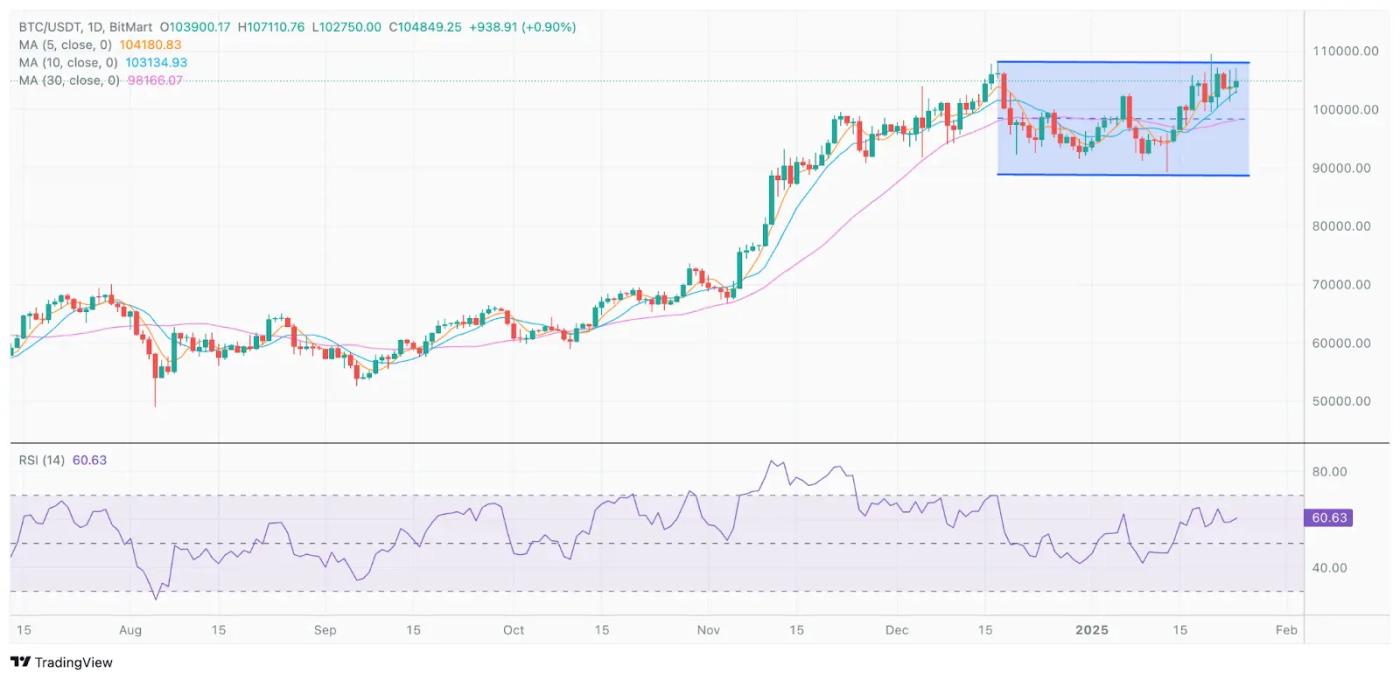
BTC price has already broken through $106,000, but the bulls are struggling to break the historical high of $109,588. Short-term sentiment has been dampened as US President Donald Trump has not yet issued a specific executive order regarding strategic BTC reserves.
On January 23, BTC rebounded from the 20-day exponential moving average ($100,831), indicating a positive market sentiment. Buyers will try to push the price above the historical high of $109,588 again. If successful, BTC/USDT may accelerate its upward trend, with a target of $126,706. On the downside, the 50-day simple moving average ($98,839) is a key support level. If this level is breached, the price may drop to the strong support zone of $90,000. Buyers are expected to vigorously defend the $90,000 to $85,000 support area, as a break below this zone could signal a deeper correction, with a target of $73,777.
4.2 ETH Price Change Analysis
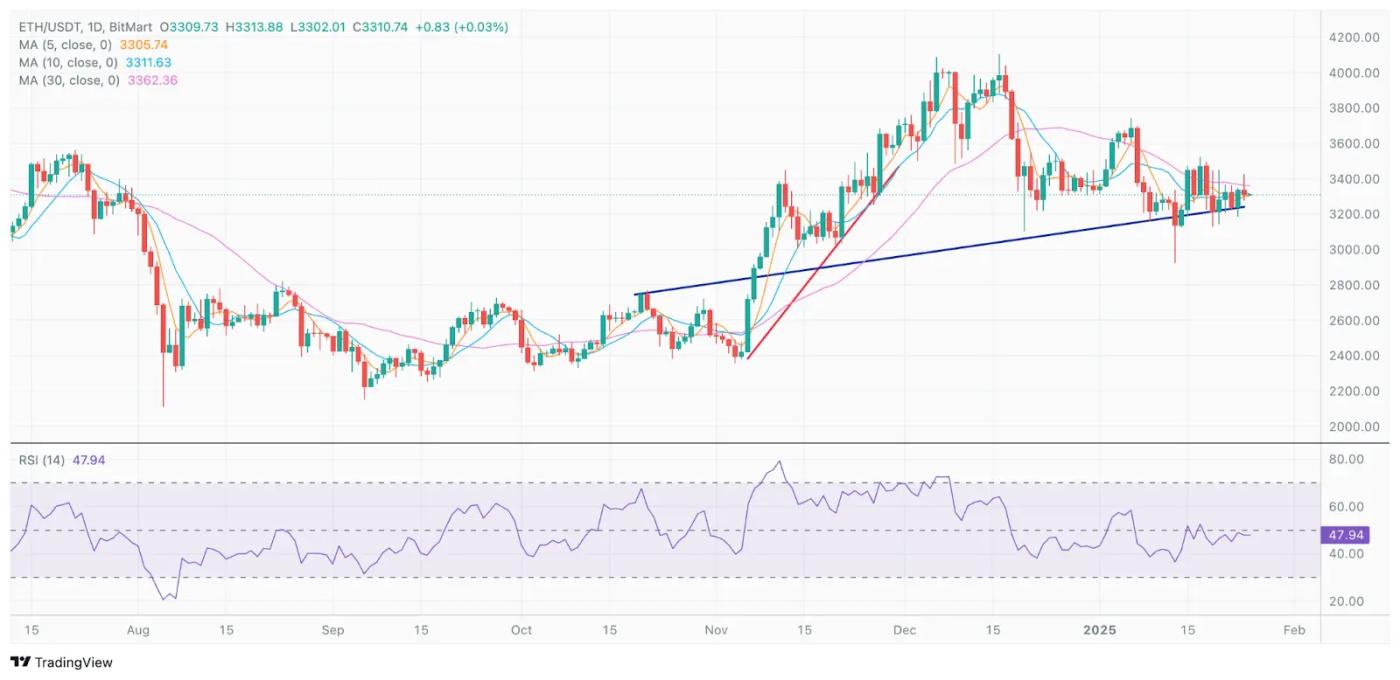
ETH rebounded from the neckline of a head and shoulders (H&S) pattern on January 23, indicating that the bulls are trying to prevent the formation of a bearish pattern. ETH/USDT may rise to the 50-day simple moving average ($3,503), which is an important resistance level in the short term. If the buyers push the price above the 50-day SMA, the pair may surge to $3,745. Conversely, if the price retreats from the 50-day SMA, it suggests that the bears are still selling at higher levels. This will increase the risk of a breakdown of the neckline. If this occurs, the price may plummet to $2,850.
4.3 SOL Price Change Analysis
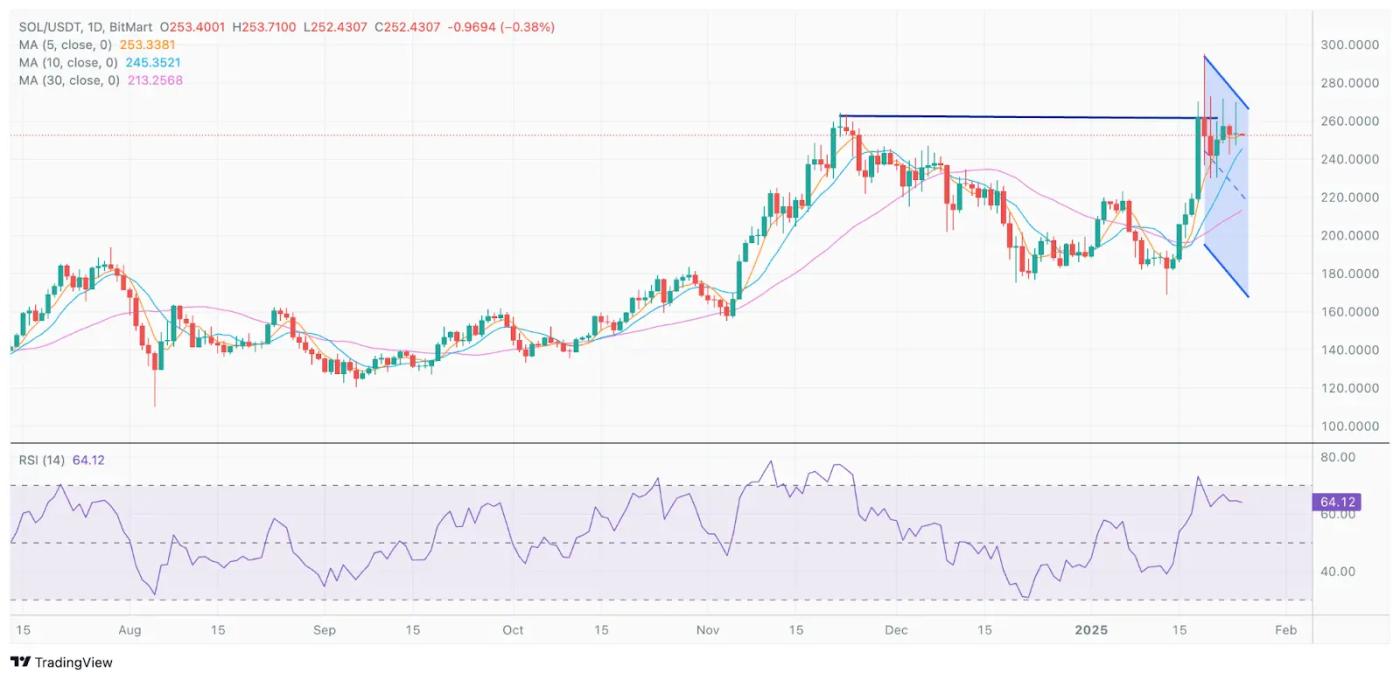
Solana has broken above the $260 resistance level, indicating that the bulls are trying to establish their dominance. There is a slight resistance at $274, but it is expected to be breached. If the buyers push the price above $274, SOL/USDT may surge to $295. Although this level may pose strong resistance, if it is conquered, the next target will be $375. The 20-day exponential moving average ($228) is a key support level on the downside. If the price breaks below and closes below the 20-day EMA, it suggests that the bulls have given up, and the price may drop to the 50-day simple moving average ($211).
5. Highlights of the Month
5.1 The Trump Couple Launches Personal Cryptocurrencies, Sparking Market Discussions
On January 18, former US President Trump officially launched the personal MEME token "TRUMP", which generated strong market attention and enthusiasm. Reportedly, 80% of the token's supply is controlled by Trump's affiliated companies CIC Digital LLC and Fight Fight Fight LLC, with the latter set to directly benefit from the revenue generated by token trading activities. According to CoinGecko data, "TRUMP" started trading at an opening price of $0.1824 and surged over 15,000% in just 12 hours, reaching around $30. The TRUMP price subsequently continued to climb, reaching a peak of $75.35, a cumulative increase of 41,200%, with a fully diluted valuation (FDV) approaching $80 billion, making it one of the most notable phenomena in the recent crypto market.
On January 20, Trump's wife Melania Trump also launched her own cryptocurrency "MELANIA". This token quickly sparked market discussions, with its price reaching a high of $13, and an FDV exceeding $13 billion. However, this enthusiasm was short-lived, as the MELANIA price rapidly fell back to $4.14, a decline of over 215%. More significantly, the launch of MELANIA shook market confidence, leading to a large-scale sell-off of TRUMP, directly causing a nearly 40% drop in TRUMP's price. This token frenzy also had a significant impact on the blockchain technology layer. Due to the sudden surge in transaction volume, Solana experienced network congestion, causing a temporary USDT price de-peg in its ecosystem, further exacerbating market volatility.
Although the cryptocurrencies launched by the Trump couple have brought unprecedented traffic and attention to the industry, they have also been accompanied by a lot of controversy. Their actions have been criticized for blurring the boundaries between public office and commercial interests, and even suspected of exploiting public positions for personal gain. This not only has the potential to damage their personal reputations, but also intensifies the regulatory pressure facing the crypto industry.
5.2 The Trump Family Crypto Project World Liberty Financial (WLFI) Sees Surging Popularity, Attracting Renewed Attention After Pre-Sale Completion
After the launch of the "MEME" token by Trump on January 20, the attention on his family's crypto project World Liberty Financial (WLFI) quickly heated up. The official announcement stated that the WLFI token pre-sale has ended, with a total of 20 billion tokens issued at a price of $0.015 per token, raising a total of $300 million. It is worth noting that crypto investor Justin Sun invested $150 million USDT to purchase 10 billion WLFI tokens. After the first round of pre-sale was completed, the WLFI team quickly announced that they would add an additional 5% to the token supply for a second round of pre-sale, and the token price would be increased to $0.05. This strategy further attracted widespread market attention, demonstrating the project's high level of popularity.
Here is the English translation of the text, with the content inside <> retained and not translated:In addition, to commemorate Trump's formal inauguration as the 47th President of the United States, World Liberty Financial (WLFI) announced a series of major strategic asset purchase plans on the day of the inauguration ceremony, specifically including: $47 million in ETH, $47 million in wBTC, $4.7 million in Aave, $4.7 million in LINK, $4.7 million in TRX, and $4.7 million in ENA.
Through the personal tokens "TRUMP" and "MELANIA", as well as the family project WLFI, Trump and his family have sparked an unprecedented craze in the crypto industry. However, the long-term impact of this series of measures remains to be observed, and the market is also concerned about whether it will lead to stricter industry regulation and policy review in the future.
5.3 Trump's Inauguration and the Signing of the Crypto Executive Order
On January 24, US President Trump formally signed the "Strengthening America's Leadership in Digital Financial Technologies" crypto executive order. This move not only demonstrates the US government's high attention to the digital asset industry, but also lays a clearer policy foundation for the future development of the industry. The core content of this executive order includes the following:
Promote the responsible development of digital assets and blockchain technology
Encourage various economic sectors to responsibly develop and apply digital assets, blockchain and related technologies, further promoting technological innovation and economic integration.Revoke restrictive policies
Canceled some outdated policies, the most notable of which was the formal revocation of the SAB-121 policy. Previously, SAB-121 required companies holding crypto assets to record these assets on their balance sheets and disclose related risks. This requirement not only increased the cost of companies holding crypto assets, but also limited their ability to provide crypto custody services. After the policy was revoked, the operational burden of relevant companies will be significantly reduced.Establish a Presidential Digital Assets Market Working Group
The executive order requires the establishment of a dedicated working group to promote the development of a federal regulatory framework within 180 days to regulate the issuance and operation of digital assets within the United States. In addition, this working group will assess the feasibility of establishing a national digital asset reserve and propose relevant standards.Explicitly prohibit the issuance and promotion of CBDC
Explicitly prohibit the development, issuance or promotion of Central Bank Digital Currency (CBDC), and no federal agency shall take any related actions within or outside the United States, in order to ensure the decentralized nature and market freedom of the financial system.
The signing of this executive order fulfills most of Trump's campaign promises to the crypto market, and also demonstrates his high attention and support for the digital finance industry. The clear regulatory framework and policy orientation will provide a more stable development environment for the digital asset industry, attracting more capital and innovative forces to enter the US market.
5.4 The AI Agent track rebounds strongly after violent fluctuations in January, with DeFAI becoming a new growth hotspot
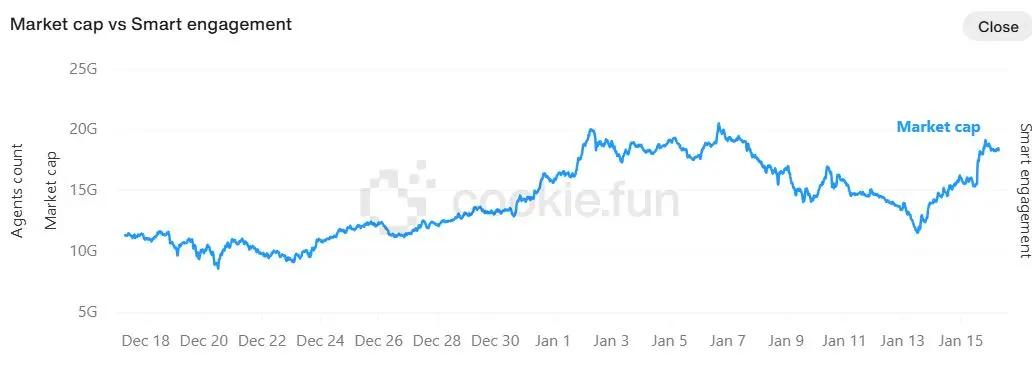
In January, the AI Agent track experienced significant market volatility, with mainstream tokens generally experiencing significant corrections. Core tokens in the Base ecosystem and Solana ecosystem, such as VIRTUAL, ai16z, and GAME, fell 20%-50% within 7 days. Nevertheless, the market has shown strong resilience in rebounding after the deep correction. According to Cookie.fun data, the total market capitalization of the AI Agent market fell from $16.13 billion at the beginning of January to a low of $11.57 billion, and then rebounded significantly in mid-month. This correction not only provided the AI Agent track with an opportunity to catch its breath and adjust, but the rapid rebound also validates the sustainability of its long-term narrative. As one of the core hotspots in the Web3 field by 2025, the AI Agent track is ushering in new growth opportunities. Against this backdrop, DeFAI (AI+DeFi) is gradually becoming an important breakthrough direction for the AI Agent ecosystem, especially in the fields of autonomous DeFi agents and market analysis and forecasting, attracting widespread attention. On January 13, the price of Bitcoin fell sharply to below $90,000, but the next day, DeFAI-related tokens bucked the trend and rose 38.73%, with GRIFT, BUZZ and ANON seeing particularly significant gains.
6. Outlook for Next Month
6.1 Crypto Policy Changes and Impacts After Trump's Inauguration
After Trump's inauguration, with the formal signing of the crypto executive order, the replacement of regulatory agency leaders such as the SEC, and the establishment of the Digital Assets Committee, the regulatory framework for US cryptocurrencies will undergo major adjustments. The following are the core changes worth noting:
The construction and promotion of the crypto asset regulatory framework
The crypto executive order signed by Trump requires the development of a federal digital asset regulatory framework within 180 days, focusing on stablecoins, crypto asset issuance and trading market structure. This framework will directly impact market access, compliance costs and operating models, and may become an important global benchmark for the crypto industry. In this context, areas previously suppressed by strong regulation, such as DeFi, RWA, and stablecoins, may usher in new development opportunities.
The feasibility of strategic national crypto asset reserves
The executive order requires an assessment of the possibility of establishing a national digital asset reserve, and considers using crypto seized by federal law enforcement agencies as a source of reserves. Currently, the US government holds mainly BTC, ETH and USDT as crypto assets, and the reserve scope may be further expanded in the future. This move may enhance the global financial status of Bitcoin and other crypto assets, and increase their credibility as a store of value.
The impact of the revocation of the SAB-121 law
The revocation of SAB-121 will lower the threshold for banks to participate in crypto asset custody, accelerating the integration of traditional financial institutions and the crypto industry. Banks will be able to legally custody crypto assets, with higher security and compliance than on-chain lending platforms, which will bring new lending and financial service models to the crypto market. In the future, banks may become the main crypto financial service providers, offering compliant financial services such as custody and lending, lowering market access thresholds, improving fund security, and attracting more traditional capital to flow into the crypto market.
6.2 Solana Price Hits New High, but Short-term ETF Approval Remains Uncertain
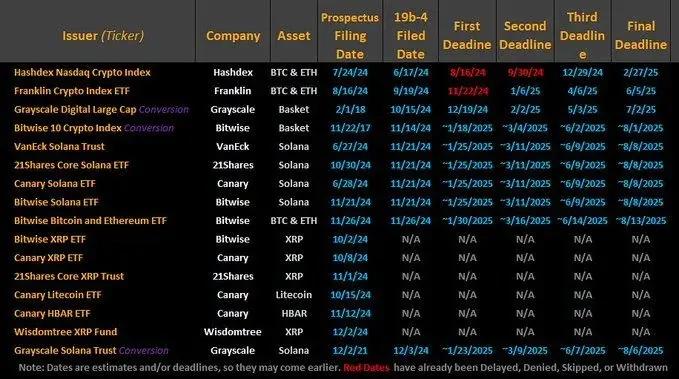
On January 19, with Trump's formal inauguration and the overall market recovery, the SOL price broke through the historical high of $286. Investors are betting on the crypto-friendly regulatory policies that the Trump administration may bring, which could increase the likelihood of Solana ETF approval. According to Bloomberg, the SEC will face the first Solana ETF approval deadline on January 25, and the SEC needs to make a decision on the Solana ETF applications submitted by VanEck, 21Shares, Canary Capital and Bitwise. However, the SEC previously sued Coinbase and Binance in 2023, alleging they traded unregistered crypto assets including SOL, and classified Solana as a security, which poses significant obstacles to the Solana ETF approval process.
Although SOL has risen sharply in the recent period due to the buoyant market sentiment, the short-term likelihood of Solana ETF approval remains relatively low. If the SEC delays approval or rejects the application, the market may cool on Solana ETF expectations, leading to a certain degree of correction in the SOL price. However, in the long run, with the adjustment of the regulatory environment, the support of the Trump administration for the crypto industry, and the successful precedents of Bitcoin and Ethereum ETFs, the launch of Solana ETF still has a high probability. In the future, changes in regulatory policies and market reactions to ETF expectations will be key factors affecting the Solana price trend.
BitMart Research Institute
The BitMart Research Institute focuses on research and analysis in the digital asset field, aiming to provide users with in-depth market insights and interpretations of crypto industry trends.
Risk Warning:
All cryptocurrency investments, including yield-generating products, are highly speculative and involve significant risks. The past performance of a product does not guarantee future results. The cryptocurrency market is highly volatile, and before making any investment decisions, you should carefully evaluate whether trading or holding digital currencies is suitable for you based on your investment objectives, financial situation, and risk tolerance, and consult a professional financial advisor. The information in this article is for reference only and does not constitute any investment, legal, or tax advice. The author and publisher are not responsible for any losses resulting from the use of the information in this article.